
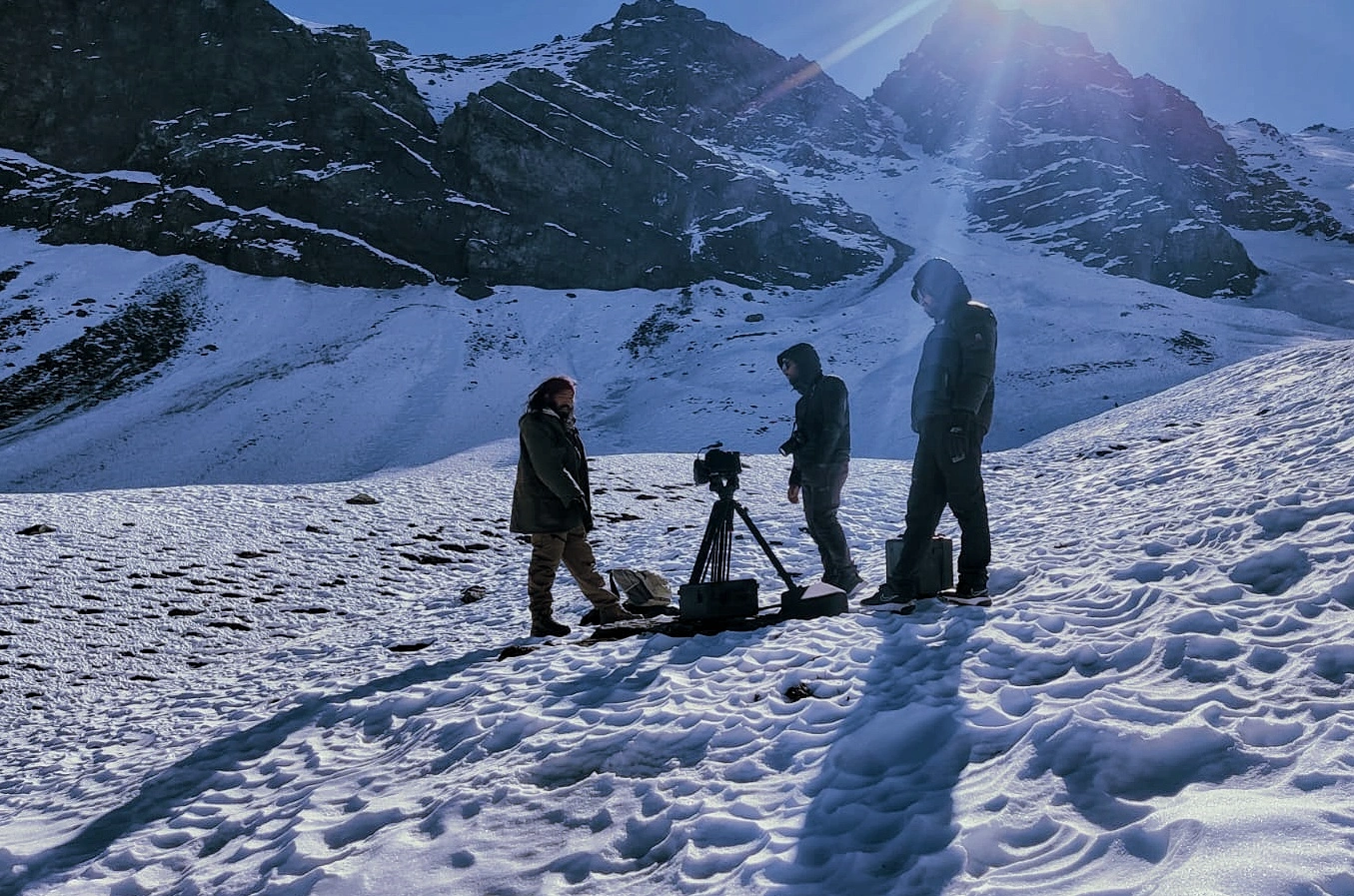
Why Everest Is the World’s Most Extreme Filming Location
Filming in the Everest region of Nepal offers one of the most visually powerful cinematic landscapes on Earth, featuring Mount Everest, Khumbu Glacier, Sherpa villages, and high-altitude monasteries.
However, it is also one of the most technically and logistically challenging filming environments, requiring government permits, extreme altitude preparation, and experienced local coordination.
International productions must work with an experienced fixer in Nepal to ensure legal compliance, safety, and efficient high-altitude logistics.
Key Filming Locations in the Everest Region
1. Everest Base Camp (5,364m)
Everest Base Camp is the primary operational center for expedition-style filmmaking in the Himalayas. During climbing seasons, the area becomes highly active with mountaineers, Sherpa teams, expedition tents, rescue operations, and logistical preparations for summit attempts. This creates a visually powerful environment for documentaries, adventure productions, and cinematic storytelling focused on extreme mountaineering.
The location offers raw and authentic visuals of high-altitude life, including climber preparation, icefall movement, communication systems, medical camps, and expedition support activities. Because of its dramatic glacial surroundings and direct proximity to Mount Everest, Base Camp is one of the most recognizable filming locations in Nepal for international productions.
2. Kala Patthar (5,644m)
Kala Patthar is widely considered the best panoramic viewpoint of Mount Everest. The location provides clear, unobstructed cinematic views of Everest along with surrounding Himalayan peaks such as Nuptse and Pumori. It is especially popular for sunrise and sunset filming because of the dramatic lighting conditions over the mountains.
For filmmakers, Kala Patthar offers high visual impact with relatively minimal technical setup compared to more remote climbing routes. The viewpoint is ideal for drone cinematography, wide-angle landscape shots, time-lapse photography, and establishing scenes for documentaries or travel productions. Due to its altitude and weather exposure, filming schedules here are usually short and carefully timed.
3. Namche Bazaar
Namche Bazaar is the main Sherpa settlement and commercial center of the Everest region. Located along the trekking route toward Everest Base Camp, the town serves as an important acclimatization stop for climbers and film crews. Its unique blend of mountain culture, tourism activity, local markets, and Himalayan lifestyle makes it an excellent location for cultural and human-centered storytelling.
Filmmakers often use Namche Bazaar to capture authentic visuals of Sherpa communities, trekking culture, mountain trade life, traditional lodges, and everyday activity in high-altitude settlements. The town also provides easier access to accommodation, internet, cafes, and local logistics support compared to higher mountain areas.
4. Tengboche Monastery
Tengboche Monastery is one of the most spiritually significant locations in the Everest region and a visually striking filming destination. Surrounded by Himalayan peaks, the monastery offers a powerful combination of Tibetan Buddhist culture, mountain scenery, and traditional Himalayan architecture.
This location is ideal for productions focused on spirituality, meditation, Himalayan traditions, or cultural documentaries. Filmmakers frequently capture prayer ceremonies, monks performing rituals, spinning prayer wheels, chanting sessions, and panoramic monastery visuals against the Everest landscape. The peaceful atmosphere and cultural importance of Tengboche make it one of the most cinematic and emotionally compelling filming locations in the region.
Permits Required for Filming in Everest, Nepal
Filming in Everest requires multiple government approvals due to its protected status inside Sagarmatha National Park.
Required Permits for Filming in Everest:
- Film Permit – Ministry of Information & Communication, Nepal
- National Park Permit – Sagarmatha National Park Authority
- Drone Permit – Civil Aviation Authority of Nepal
- Local Municipality Approval (if required)
- Mountaineering Coordination (for expedition zones)
👉 Without a professional fixer in Nepal, permits are often delayed or rejected due to strict regulatory processes.
Role of a Fixer In Nepal for Everest Film Production
A professional fixer In Nepal plays a critical role in managing high-altitude film logistics and legal compliance.
Core Responsibilities:
- Government permit preparation and submission
- Customs clearance for film equipment (cameras, drones, lighting kits)
- Coordination with national park authorities
- Helicopter, porter, and yak logistics management
- Weather-based shooting coordination
- Emergency response planning at altitude
👉 A fixer in Nepal significantly reduces production risks in Everest’s extreme environment.
Filming Cost in Everest (Estimated Breakdown)
Filming in Everest is significantly more expensive than standard production due to altitude and logistics.
Major Cost Factors:
- Government permits and park fees
- Helicopter transport (hourly operations)
- Porter and yak transportation
- High-altitude crew accommodation
- Equipment insurance and risk coverage
- Fixer and coordination services
👉 Everest productions can cost 5x to 10x more than Kathmandu-based shoots.
Major Challenges of Filming on Mount Everest
Filming on Mount Everest is one of the most demanding productions in the world. Extreme altitude, unpredictable weather, remote logistics, and technical limitations create serious challenges for filmmakers, documentary crews, and commercial productions.
1. Altitude Risks
A.Acute Mountain Sickness (AMS)
One of the biggest dangers during Everest filming is Acute Mountain Sickness (AMS). As crews ascend to higher elevations, the body receives less oxygen, which can lead to headaches, nausea, dizziness, fatigue, and breathing difficulties. If ignored, AMS can develop into life-threatening conditions such as High Altitude Pulmonary Edema (HAPE) or High Altitude Cerebral Edema (HACE).
B.Low Oxygen Levels Above 3,000m
Oxygen levels decrease significantly above 3,000 meters, making even simple physical activities exhausting. Camera operators, drone pilots, sound technicians, and production teams often experience reduced stamina, slower movement, and difficulty concentrating. At Everest Base Camp and higher camps, oxygen levels can drop to nearly half of sea-level conditions.
C.Limited Working Hours Per Day
Because of harsh environmental conditions and physical exhaustion, filming schedules become extremely limited. Crews usually work only a few productive hours each day before weather changes, fatigue, or altitude exposure force operations to stop. This increases production timelines and costs significantly.
2. Weather Conditions
A.Sudden Snowstorms
Weather in the Everest region changes rapidly without warning. Clear skies can quickly turn into heavy snowfall or blizzards, forcing productions to halt immediately. Snowstorms can delay filming for days and create dangerous trekking or helicopter conditions.
B.Strong Winds
High-altitude wind speeds around Everest can become extremely powerful, especially near ridgelines and exposed areas. Strong winds affect drone stability, audio recording quality, tripod setups, and overall crew safety. Wind chill also increases the risk of frostbite and equipment damage.
C.Rapid Visibility Changes
Fog, cloud movement, and snowfall can reduce visibility within minutes. This creates difficulties for aerial filming, mountain cinematography, navigation, and maintaining visual continuity during shoots. Helicopter flights are frequently delayed or canceled due to poor visibility.
3. Logistics Limitations
A.No Road Access Beyond Lukla
There are no road connections to the Everest region beyond Lukla. Most film crews must first fly into Lukla and then trek for several days to reach filming locations such as Everest Base Camp. Transporting production gear becomes physically demanding and time-consuming.
B.Helicopter Dependency for Heavy Equipment
Professional film productions often rely on helicopters to transport cinema cameras, drones, batteries, lighting gear, generators, and medical supplies. However, helicopter operations in the Himalayas are expensive and heavily affected by weather conditions.
C.Yak and Porter Transport Systems Only
In remote trekking sections, equipment is mainly carried by yaks and porters. This limits the amount of gear that can be transported efficiently. Productions must carefully prioritize lightweight and essential equipment while planning backup logistics.
4. Equipment Challenges
A.Battery Failure in Freezing Temperatures
Cold temperatures rapidly drain camera, drone, and communication device batteries. Batteries that normally last several hours at lower altitudes may lose power within minutes in freezing Everest conditions. Crews often keep batteries inside insulated pouches or sleeping bags to preserve heat.
B.Camera Freezing and Condensation Issues
Extreme cold can freeze camera components, lenses, and moving parts. When equipment moves between cold outdoor environments and warmer indoor tents or lodges, condensation forms inside cameras and lenses, potentially causing permanent damage.
C.Limited Technical Repair Access
There are no professional camera repair facilities in the Everest region. If critical filming equipment fails, replacement or repair may take days or require transportation back to Kathmandu. Productions therefore carry backup cameras, storage devices, cables, and power systems to reduce risk.
Production Workflow for Everest Filming
Filming in the Everest region requires a carefully structured production workflow that combines mountain logistics, safety planning, weather coordination, and technical preparation. Unlike standard productions, Everest filming involves operating in one of the world’s most remote and extreme environments, where every phase must be planned with precision.
Phase 1: Pre-Production (30–90 Days)
The pre-production stage is the foundation of a successful Everest filming project and usually begins 30 to 90 days before arrival in Nepal. During this phase, production teams conduct detailed script breakdowns to identify required locations, weather conditions, aerial shots, trekking routes, and altitude-sensitive scenes. Location planning is critical because many filming areas in the Everest region require multiple days of trekking and specialized logistics support.
Permit applications and government approvals are also handled during this period. Productions may require filming permits from various Nepali authorities depending on the nature of the shoot, drone usage, national park access, and commercial production requirements. International crews also prepare equipment documentation, insurance coverage, and customs paperwork before departure.
Another major focus during pre-production is developing a crew acclimatization strategy. Since altitude sickness is a serious risk in the Himalayas, filmmakers must design gradual ascent schedules that allow the body to adapt safely to higher elevations. Proper acclimatization planning helps reduce medical emergencies and improves crew performance during filming.
Phase 2: Arrival & Setup
Once the production team arrives in Kathmandu, the setup phase begins. International film crews typically organize final logistics, hotel coordination, equipment inspection, and local production briefings before entering the Everest region. Kathmandu also serves as the primary operational base for transportation, staffing, and emergency support.
One of the most important steps during this phase is customs clearance for professional filming equipment. Cameras, drones, batteries, communication systems, and cinema gear often require temporary import documentation and clearance procedures at the airport. Delays in customs processing can affect production schedules, so accurate documentation is essential.
After preparations in Kathmandu, crews travel to Lukla, which acts as the gateway to the Everest region. From Lukla onward, all movement depends on trekking routes, helicopters, yaks, and porters. Trek logistics are carefully organized to transport equipment, power systems, food supplies, medical kits, and camping gear toward filming locations such as Everest Base Camp and nearby mountain areas.
Phase 3: High-Altitude Shooting
The high-altitude shooting phase is the most physically demanding part of Everest production. Due to low oxygen levels and extreme weather conditions, crews often follow rotational filming schedules that balance work, rest, and acclimatization. Teams may film for a limited number of hours each day before descending or resting to avoid exhaustion and altitude-related health risks.
Production planning during this phase is highly dependent on weather conditions. Snowstorms, cloud cover, strong winds, and sudden visibility changes can interrupt filming without warning. As a result, Everest productions must remain flexible and maintain backup shooting plans to adapt quickly to changing mountain conditions.
Daily health and safety monitoring is also essential. Oxygen saturation levels, hydration, fatigue, and symptoms of altitude sickness are regularly checked for all crew members. Larger productions may include high-altitude medical staff, oxygen cylinders, satellite communication systems, and emergency evacuation planning to ensure crew safety throughout the shoot.
Phase 4: Wrap-Up & Data Management
After filming is completed, productions enter the wrap-up and data management phase. Equipment descent logistics are carefully coordinated to safely transport cameras, drones, batteries, storage devices, and support gear back down the trekking routes or via helicopter operations. Since mountain transportation is limited, productions often stagger equipment movement over several days.
Once the crew returns to Kathmandu, all recorded footage is backed up and organized immediately. Data management is extremely important because harsh weather, battery issues, and physical transport risks can damage storage devices during Everest productions. Multiple backups are typically created before international departure to prevent data loss.
The final stage involves customs clearance procedures for exporting filming equipment out of Nepal. Production companies verify temporary import records, complete airport documentation, and ensure compliance with local filming regulations before the crew departs. Proper wrap-up coordination helps avoid delays, equipment disputes, or logistical complications after production ends.
Best Season for Filming on Everest
Choosing the right season is one of the most important factors for a successful production in the Everest region. Weather stability, visibility, temperature, expedition traffic, and helicopter accessibility all directly affect filming quality and crew safety. While Everest can technically be filmed throughout the year, spring and autumn are considered the most reliable production windows.
1.Spring (March – May) – Best Season for Everest Filming
Spring is widely regarded as the best season for filming in Mount Everest because of its relatively stable weather, clearer skies, and active mountaineering atmosphere. During this period, temperatures become more manageable compared to winter, allowing film crews to operate cameras, drones, and batteries more efficiently in high-altitude environments.
One of the biggest advantages of spring filming is the presence of Everest expedition teams preparing for summit attempts. This creates opportunities for documentary projects, adventure productions, and cinematic storytelling focused on mountaineering culture, Sherpa life, and expedition logistics. Base camps become highly active, visually dynamic, and ideal for capturing authentic Everest expedition footage.
The season also offers better natural lighting conditions, reduced cloud cover, and more predictable helicopter operations, making aerial cinematography and mountain landscape filming significantly easier. Trekking routes toward Everest Base Camp are also more accessible during spring compared to harsh winter months.
2.Autumn (October – November)
Autumn is another excellent season for filming in the Everest region. After the monsoon rains clear the atmosphere, the Himalayan skies often become exceptionally clean and transparent, providing outstanding long-distance visibility for landscape cinematography and aerial filming.
This season is particularly valued for its stable climate and balanced temperatures. Weather conditions are generally calmer than winter, while trails remain dry and easier for equipment transport using porters and yaks. Filmmakers frequently choose autumn for commercial shoots, documentaries, tourism campaigns, and cinematic mountain visuals because the lighting during this period creates dramatic contrasts and vivid Himalayan scenery.
Autumn sunlight in the Everest region is often softer and more cinematic, especially during sunrise and sunset hours. Snow-capped peaks appear sharper and more detailed, making this season ideal for capturing visually striking mountain footage.
3.Monsoon and Winter Seasons
The monsoon season, which typically occurs from June to September, creates major filming difficulties in the Everest region. Heavy rainfall, dense cloud cover, landslides, slippery trails, and poor visibility significantly disrupt trekking and helicopter operations. Flights to Lukla are frequently delayed or canceled during this period, making production schedules highly unreliable.
Winter filming, usually between December and February, presents a different set of challenges. Temperatures drop to extreme levels at higher elevations, increasing the risk of frostbite, battery failure, frozen equipment, and dangerous wind conditions. Many trekking routes and high-altitude areas become difficult to access safely, while heavy snowfall can isolate filming locations for days.
Although monsoon and winter productions are possible for specialized documentaries or extreme-environment projects, they involve higher operational risks, increased costs, and greater safety concerns. For most professional productions, spring and autumn remain the preferred filming seasons for achieving both safety and high-quality cinematic results.
Why a Fixer IN Nepal Is Essential for Everest Filming
Filming in the Everest region is far more complex than a standard international production. The combination of government regulations, mountain logistics, altitude risks, remote transportation, and local coordination makes professional local support essential. This is why working with a fixer in Nepal becomes one of the most important parts of a successful Everest production.
Without an experienced fixer in Nepal, international film crews often face major operational challenges before filming even begins. One of the most common problems is permit rejection or delays caused by incomplete documentation, incorrect application procedures, or missing approvals from government authorities. Since Everest filming may involve multiple permits for national parks, drones, commercial filming, and restricted mountain areas, the approval process can quickly become complicated for foreign productions unfamiliar with Nepal’s system.
Customs clearance is another major challenge. Professional cinema equipment, drones, communication systems, batteries, and filming accessories entering through Kathmandu often require temporary import documentation and customs coordination. Without local production support, crews may experience costly delays at the airport, equipment holding issues, or confusion regarding import regulations.
Logistics coordination in the Everest region is also highly demanding. There are no road connections beyond Lukla, meaning productions depend on flights, helicopters, porters, yaks, trekking schedules, and weather-sensitive transportation systems. Without proper local coordination, equipment movement, accommodation planning, crew transport, and shooting schedules can become unreliable and expensive.
Legal compliance is another critical concern. Nepal has specific filming regulations related to drone operations, protected areas, aviation permissions, cultural sensitivity, and mountain safety protocols. Productions operating without proper local guidance risk violating regulations, facing fines, or encountering filming restrictions during the project.
Working with a professional fixer in Nepal helps solve these challenges efficiently. A fixer manages government approvals, permit coordination, local communication, transportation planning, and operational support throughout the production process. This allows filmmakers to focus more on storytelling and cinematography rather than administrative complications.
A local fixer also provides efficient logistics planning by organizing helicopters, trekking support teams, accommodation, translators, location scouts, local crew members, and emergency coordination. Because mountain conditions can change rapidly, having experienced on-ground support becomes essential for adapting production schedules safely and efficiently.
One of the biggest advantages of hiring a fixer in Nepal is real-time crisis management. Weather disruptions, altitude sickness, transportation delays, equipment problems, or route changes are common during Everest productions. A skilled fixer helps crews respond quickly to unexpected situations while maintaining safety and minimizing production downtime.
Ultimately, a fixer in Nepal acts as the operational backbone of Everest filming projects. From pre-production permits to high-altitude logistics and final wrap-up coordination, local expertise ensures smoother execution, reduced risk, and a far more reliable production experience in one of the world’s most challenging filming environments.
Conclusion
Filming in Everest is one of the most visually rewarding yet operationally complex productions in the world. Success depends on permits, altitude preparation, logistics planning, and expert local coordination.
Working with an experienced Fixer IN Nepal ensures that international crews can focus on storytelling while all technical, legal, and environmental challenges are professionally managed.