
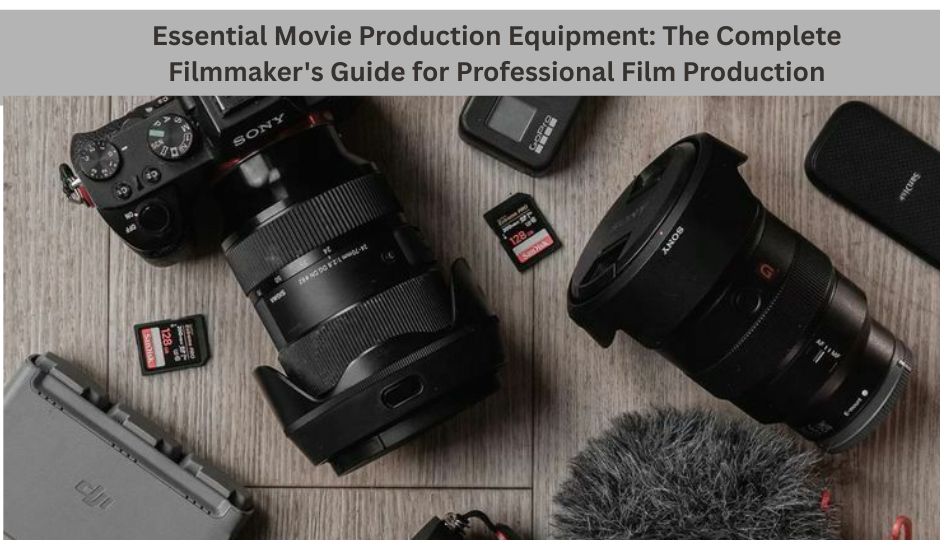
Ever wondered why some films look like a million dollars while others, shot in the same city with the same story, feel flat and cheap? Talent matters, of course. But behind every great-looking film sits a carefully chosen kit of movie production equipment doing the quiet, heavy work.
At Fixer IN Nepal, we advise production houses and filmmakers across Nepal, and we have seen how the right gear and the right paperwork behind it makes or breaks a production. In this guide, we walk through every category of professional film production gear in plain, simple language.
Why Movie Production Equipment Matters More Than You Think
A film is really just light and sound, captured and arranged. Every piece of filmmaking gear exists to control one of those two things. When you control light and sound well, even a modest story feels cinematic. When you lose control of them, no amount of editing can rescue the footage.
Good movie production equipment gives you three things: control over exposure, focus, and sound in any condition; consistency, so shot one and shot two hundred look like the same film; and reliability, because a camera that fails on set costs money every single minute it sits idle. There is a fourth thing too, and it is the one people forget. Equipment is a legal asset. It can be bought, rented, insured, imported, and disputed over. That is where a firm like Fixer in Nepal quietly enters the picture, and we will come back to it later in this guide.
Now let us walk through the full kit, department by department, the way a real film crew is organized.
Camera Department: The Heart of Your Kit
- Cinema Cameras
The camera is the most talked-about piece of movie production equipment, and often the most misunderstood. A cinema camera is different from a normal camera in a few clear ways. It has a larger sensor for that soft, filmic background blur. It handles bright skies and dark shadows in the same frame without losing detail. And it records in formats built for serious color work later in editing.
Filmmakers usually choose from three tiers:
- Entry level: Blackmagic Pocket Cinema Camera, Sony FX30 cinematic images at a friendly price
- Mid level: Sony FX6, Canon C70, RED Komodo the workhorses of commercials and indie films
- High end: ARRI Alexa 35, Sony Venice 2 the standard for feature films and premium work
One camera body is rarely enough on a professional set. Most productions carry a second camera so coverage moves faster and no scene depends on a single machine.
- Lenses: Where the Look Really Comes From
Ask any experienced cinematographer and you will hear the same advice. The lens shapes your image more than the camera does. Fixer lenses have a fixed focal length, and they reward you with sharper images and better performance in low light. Zoom lenses trade a little of that quality for flexibility, which is why documentary and event shooters love them.
A practical starter set covers wide, normal, and tight views. Something like a 24mm, a 35mm, a 50mm, and an 85mm Fixer will handle almost every scene you can imagine. Add one versatile zoom, and your kit is ready for anything from interviews to action.
- Camera Support: Steady Wins the Shot
Shaky footage is the fastest way to look amateur. Camera support gear turns movement into a creative choice instead of an accident. Every kit begins with a fluid-head tripod. From there, a gimbal gives you smooth walking shots, a slider adds gentle motion to interviews, and a shoulder rig brings controlled handheld energy to documentary work. Bigger productions add dollies and jibs for sweeping, precise moves. Start with the tripod and the gimbal. Let your projects tell you when to buy the rest.
Lighting Department: Painting With Light
Here is a secret from working film sets everywhere. Lighting matters more than your camera. A cheap camera with beautiful lighting beats an expensive camera in bad light, every single time.
Modern sets run on LED. Powerful point-source lights, like the popular Aputure COB series, act as your main light. Flat LED panels fill in shadows. Flexible tube lights add color and mood in tight spaces. And practical lights, the lamps and bulbs that appear inside the scene itself make a set feel like a real, lived-in place.
Raw light, however, is harsh. Modifiers shape it into something beautiful:
- Softboxes and domes turn hard light into soft, flattering light
- Diffusion frames spread light evenly across a scene
- Reflectors and bounce boards redirect existing light for free
- Flags and black cloth cut light where you do not want it
The classic three-point setup of a key light, a fill light, and a backlight is still the starting grammar of film lighting. Learn it first. Break it later, on purpose.
Sound Department: The Half of Film Everyone Forgets
Audiences forgive a slightly soft image. They never forgive bad audio. Sound gear is the most underrated category of movie production equipment, and it is where new filmmakers lose the most quality without even noticing.
The backbone of any dialogue scene is a shotgun microphone on a boom pole, held just outside the frame. For interviews and wide shots where a boom cannot reach, small lavalier mics clip onto the actor’s clothing, often paired with wireless transmitters. All of that sound flows into a dedicated field recorder, such as a Zoom F6, while the sound recordist listens through closed-back headphones to catch problems before they ruin a take. Shooting outdoors? A furry windshield is not optional. Wind noise recorded on set can never be fixed in editing.
One simple rule saves every production: always record audio on a dedicated recorder, not just inside the camera. Your editor will thank you later.
Grip and Electric: The Unsung Heroes
Grip equipment is everything that holds, rigs, and powers the set. Nobody photographs it for social media, yet no professional film production runs a single day without it:
- C-stands = the all-purpose workhorse for holding lights and flags
- Sandbags = keep every stand from crashing down mid-take
- Apple boxes = for standing on, propping up, and a hundred other jobs
- Gaffer tape = honestly, the most used item on any set
- Extension cables and power distribution = safe, organized power for every department
- V-mount batteries = portable power for cameras, lights, and monitors on location
Here is a smart budget tip. Grip gear is affordable, never goes out of date, and lasts for decades. It is the wisest first purchase for any new production company.
Monitoring and Data: Protecting Your Work
You cannot fix what you cannot see, and you cannot deliver what you lose. An on-camera monitor gives you a bright, accurate view for focus and exposure. A wireless video system sends the live feed to the director, so nobody crowds the camera between takes. Then comes the part that separates professionals from gamblers: data management. Every memory card gets copied to two separate drives before anyone sleeps. Losing a day of footage costs far more than any backup drive ever will.
Post-Production Equipment: Where the Film Is Actually Made
Filming captures the ingredients. Post-production cooks the meal. Your editing setup is movie production equipment too, and it deserves real planning. You need a powerful workstation with a strong graphics card and fast storage, editing software such as DaVinci Resolve or Adobe Premiere Pro, a color-accurate monitor so the colors you grade are the colors your audience sees, and honest studio headphones for mixing sound. If you shoot in 4K and above, do not cut corners here. A slow computer quietly eats entire production days in render time.
The Legal Side of Movie Production Equipment: Where Fixer in Nepal Comes In
Now for the part almost every equipment guide skips, and the part we know best. Film gear is expensive, mobile, and shared between many hands. That combination creates legal risk, and Fixer in Nepal helps filmmakers manage it before it turns into a dispute.
Think about a normal shoot for a moment. You rent a cinema camera from one vendor, borrow lights from a friend’s studio, and hire freelancers who bring their own audio kit. Who is responsible if the camera is damaged? What happens if a rental is returned late? Whose insurance covers a stolen lens? Without written agreements, the answer is usually a long, unpleasant argument.
Here is where careful paperwork protects your production:
- Equipment rental agreements = clear terms on damage, late returns, deposits, and liability
- Equipment insurance = coverage for theft, damage, and loss on location
- Purchase contracts and warranties = especially for high-value imported gear
- Import duties and customs guidance = professional film equipment brought into Nepal has its own rules
- Asset records = a proper inventory with serial numbers, essential for insurance claims and company accounts
Buying vs Renting: The Question Every Filmmaker Faces
Should you buy your movie production equipment or rent it? The honest answer is both, strategically. Buy the gear you touch on every single shoot your tripod, your audio kit, your core lights, and your grip basics. Rent the gear that is expensive or project-specific, like high-end cinema cameras, specialty lenses, and large lighting packages.
A simple test helps you decide. If a piece of equipment would pay for itself within five to eight rentals, buying starts to make sense. If not, renting keeps your money free for the projects themselves. And whichever path you choose, put the terms in writing. That is not lawyer talk. That is just how professionals protect each other.
Building Your Kit by Budget Level
Every filmmaker starts somewhere, and growing too fast is a common trap. A sensible path looks like this:
- Starter kit = one mirrorless cinema camera, two Fixer lenses, a tripod, one LED light with a softbox, a shotgun mic, and a field recorder
- Working professional kit = add a second camera, a gimbal, a three-light setup, wireless lavs, and a proper grip package
- Production house kit = multiple cinema cameras, a full Fixer set, a deep lighting inventory, wireless video, and a color-graded editing suite
The pattern is simple. Grow your equipment as your projects grow. Never before.
Final Thoughts: Gear Serves the Story, and the Law Protects the Gear
Movie production equipment exists for one purpose to remove the technical barriers between your vision and the screen. The best filmmakers are not the ones with the longest gear list. They are the ones who know their equipment so well it disappears, leaving only the story.
So start with the essentials. Master each piece before adding the next. Rent smart, buy smarter, and put every agreement in writing. And when the legal side of your movie production equipment needs a steady hand from rental contracts to insurance to company setup, Fixer in Nepal is ready to stand behind your production, so nothing stands between you and the film you want to make.
Frequently Asked Questions (FAQ)
1. What equipment do I need to start making films?
A camera with manual control, one versatile lens, a sturdy tripod, a shotgun microphone with a recorder, and one good light with a softbox. That small kit, used with skill, can produce genuinely professional results.
2. What is the most important piece of movie production equipment?
Sound gear, surprisingly. Audiences tolerate an imperfect image but switch off instantly at bad audio. After sound, lighting shapes your film more than the camera itself.
3. Do I need an expensive cinema camera for professional film production?
No. Modern entry-level cinema cameras produce broadcast-quality images. Skill in lighting, sound, and composition matters far more than the price tag on your camera.
4. Should I buy or rent film production equipment?
Buy the essentials you use on every shoot, such as your tripod, audio kit, and core lights. Rent expensive, project-specific items until your workload clearly justifies owning them.
5. Do I need a written agreement when renting film equipment?
Yes, always. A rental agreement should cover damage, late returns, deposits, and insurance responsibility. Fixer in Nepal drafts and reviews equipment rental contracts so both sides are protected before the gear leaves the shelf.
6. Is film equipment insurance worth it in Nepal?
For any serious production, yes. Cameras and lenses travel between locations and pass through many hands. Insurance, paired with a proper inventory of serial numbers, protects your biggest business investment.
7. How can Fixer in Nepal help filmmakers and production companies?
Fixer in Nepal prepares equipment rental and purchase agreements, advises on insurance and import matters, registers production companies, and resolves disputes giving filmmakers a solid legal base so they can focus on the creative work.